South Florida, considered

Coral Gables

Coral Gables pairs a strong civic identity with meaningful variation in architecture, lot pattern, water access and everyday rhythm.

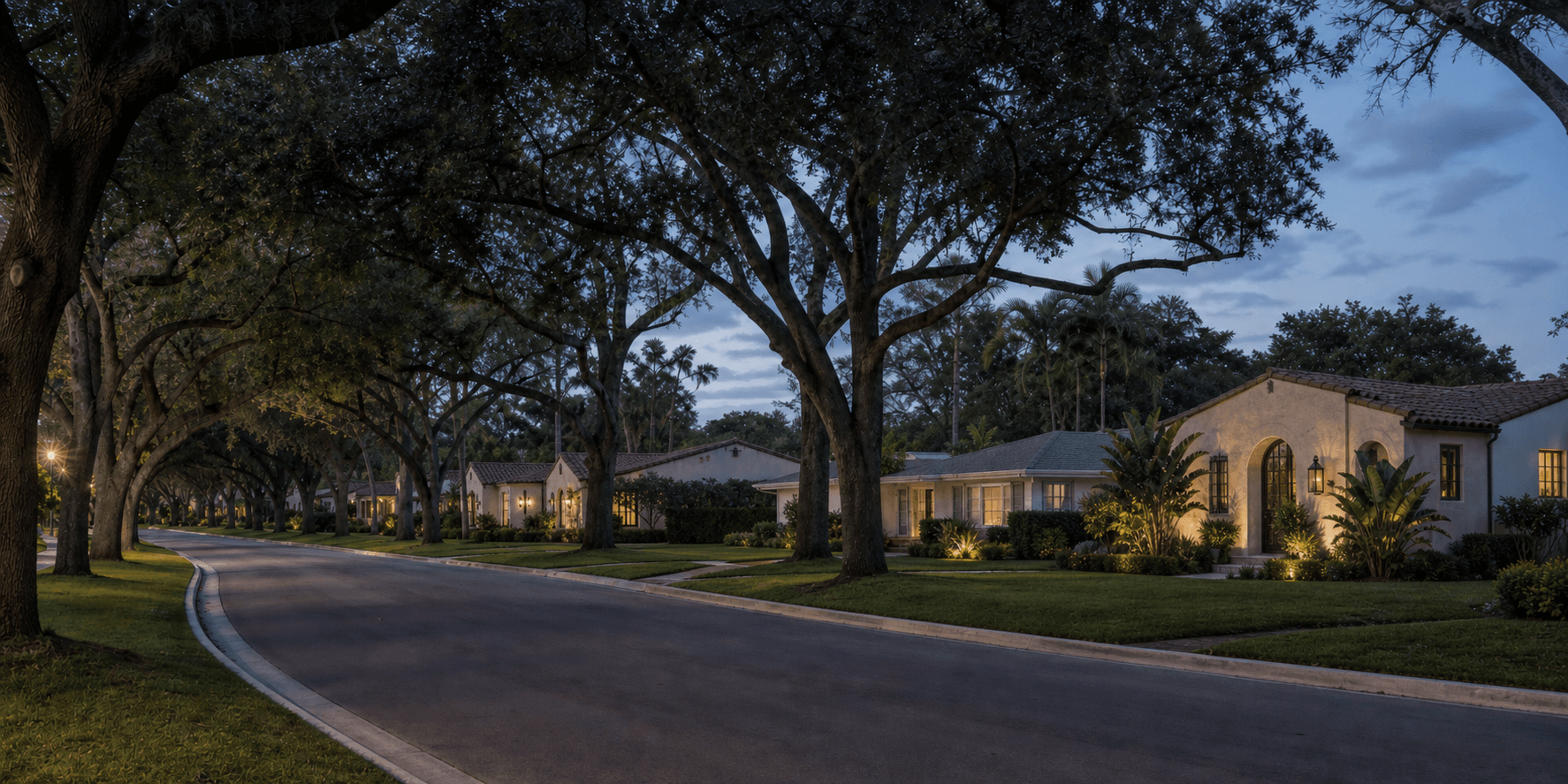
Illustrative Coral Gables avenue with live-oak canopy and varied historic homes at dusk
Illustrative interpretation—not a specific property.

A place, read closely

Coral Gables has a legible identity—canopied streets, civic landmarks, architectural review and a long tradition of Mediterranean-influenced design. Within that identity are distinct property experiences: historic houses near the center, apartments and condominiums, canal and bayfront residences, postwar homes and larger estates farther south. The city name provides context; the specific address still determines the decision.

What shapes the decision

Three conditions to notice first.

  1. 01

    Planning, architectural standards and historic context can affect what may be changed.

  2. 02

    Property scale and daily access vary considerably from the urban center to southern residential areas.

  3. 03

    Older architecture brings character together with questions about systems, additions and documentation.

Reading Coral Gables

What the place asks you to consider.

01

Understand which Coral Gables you are choosing

Proximity to the city center can support a more connected daily pattern, while residential areas farther south often place greater emphasis on land, privacy and driving. Waterfront and canal properties introduce another set of considerations. These are not better-or-worse choices; they are different ownership experiences within one municipality.

Test the routes that matter rather than relying on distance alone. Major roads, school and event traffic, bridges, rail crossings and the location of everyday services can change how convenient an address feels.

02

Let architectural character prompt better questions

A historic or older home may offer proportions, materials and a relationship to the street that are difficult to reproduce. It may also carry decades of alterations. Review the age and condition of major systems, the history of additions and whether the record aligns with what is physically present.

For a planned improvement, determine which zoning, architectural or historic reviews may apply before assuming a design can be executed. The right professional conversation early can protect both the idea and the property’s long-term coherence.

03

Look beyond the composition of the street

The city’s visual continuity can make two properties appear more similar than they are. Lot dimensions, setbacks, easements, canopy, flood context and neighboring development potential still require a parcel-level review.

Waterfront ownership adds seawall, dock, access and exposure questions. Condominium ownership adds association records, shared systems and reserves. The address may be Coral Gables; the work of understanding it remains specific.

Before narrowing the search

Questions worth carrying with you.

  • Which approvals or design standards could affect a future change?
  • Does the documented history explain the home as it exists today?
  • How do lot, setback and neighboring scale shape privacy and light?
  • What does the ordinary route to work, services or the airport actually feel like?
  • For waterfront property, what condition and permitting questions need specialist review?

Public resources

Useful places to begin verifying.

Links reviewed July 31, 2026

Coral Gables offers a powerful sense of place. A sound decision still comes from understanding which part of that place—and which responsibilities—fit the life around it.

Begin a conversation

Tell us what you are hoping a place will make possible.

We will begin with the life around the decision and respond personally, usually within one business day.

Sending this asks us to reply to your inquiry. We won’t add you to any mailing list unless you check the box above, and we never share your details.