
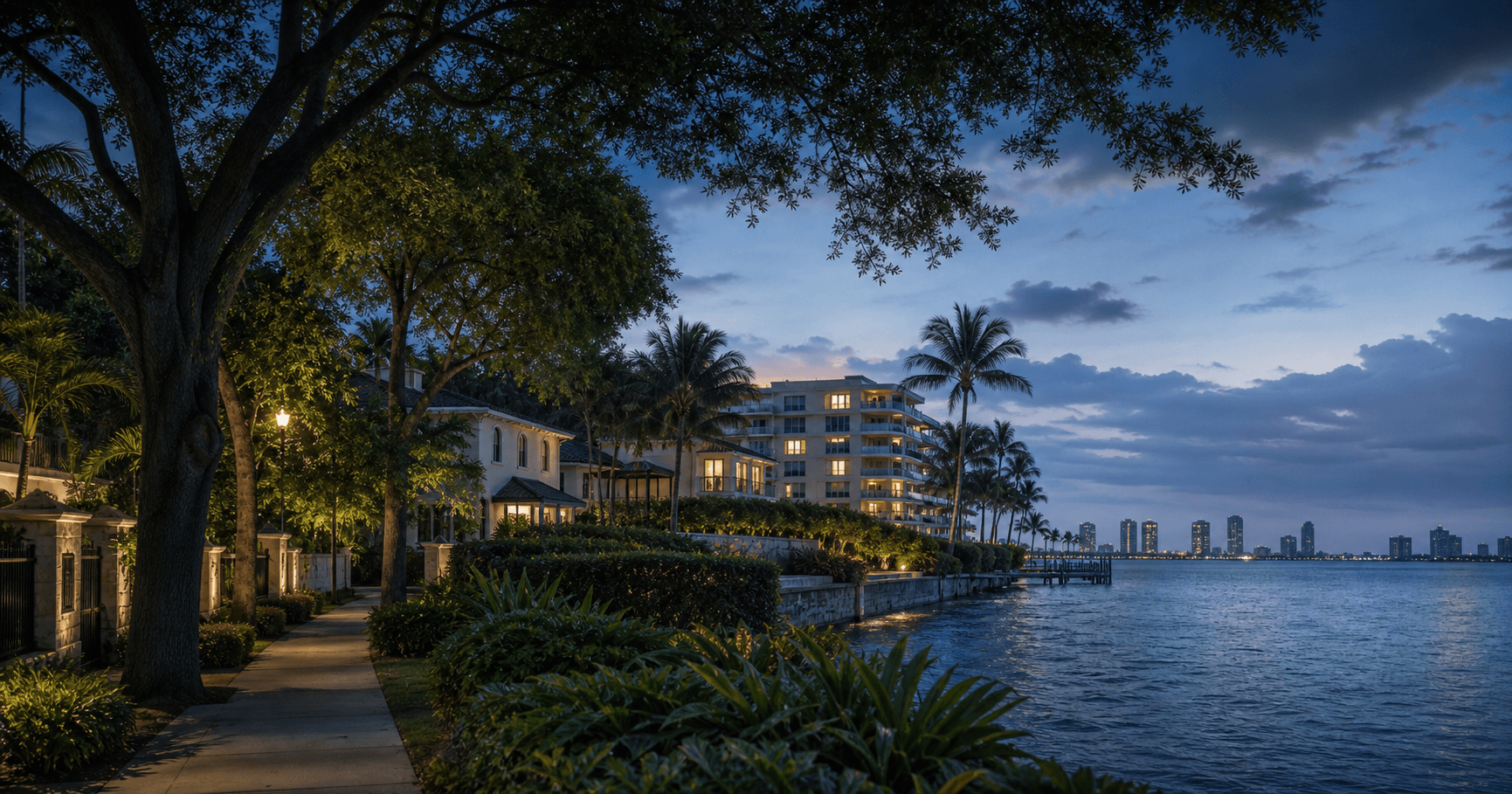
South Florida can be easy to admire and surprisingly difficult to understand from a distance. The water, architecture and winter light make an immediate case for the region. Choosing where—and how—to live here asks for a slower kind of attention: one that begins with ordinary life rather than available property.
Begin with the life, not the map
Relocation searches often begin with a wide radius and a list of features. That can identify possibilities, but it cannot decide which daily pattern will feel natural. Before comparing neighborhoods, describe the week you are trying to create: where mornings begin, how often you expect to travel, who needs to be nearby and what you want returning home to feel like.
A household seeking walkability, a boat owner, a frequent traveler and someone prioritizing quiet may all draw different boundaries around the same region. The useful starting point is not where people say you should live. It is what your own routines require.
Understand the region as a collection of places
South Florida is connected, but it is not uniform. A waterfront street, an urban condominium district, an established residential neighborhood and a newer planned community can sit within the same broad market while offering very different rhythms, costs and expectations.
Names on a map can also conceal meaningful variation within a neighborhood. Proximity to water, elevation, through-traffic, nearby construction, lot patterns and the quality of the public realm may change within a few blocks. Broad market information is useful context; a relocation decision ultimately becomes specific.
Choose an ownership experience before choosing a property
A condominium and a single-family home are not simply different structures. They are different forms of responsibility. Condominium ownership may exchange direct maintenance for shared governance, building rules, association finances and collective decisions. A house may provide more autonomy while placing systems, landscape, weather preparation and ongoing care more directly with the owner.
Neither model is inherently simpler. The better choice depends on how you expect to use the property, how much control you value and which responsibilities you prefer to manage yourself. Clarifying that preference early prevents a beautiful residence from deciding the question for you.
Include climate and carrying costs in the first conversation
Insurance, flood exposure, wind protection, association obligations, taxes and maintenance are not closing-table details. They help define whether a property remains comfortable to own. Two residences with similar prices can create very different long-term commitments.
These questions deserve property-specific documents and qualified professional advice. At the beginning of a search, the goal is not to predict every cost. It is to recognize which forms of ownership and which locations require deeper investigation before emotion and momentum take over.
Test an ordinary week
Visit at the times you would actually be moving through the area. Make a morning drive. Walk after sunset. Try an ordinary errand. Notice school traffic, bridge patterns, parking, construction, summer shade and how quickly a quiet street changes near a busier route.
If possible, experience the region outside its most flattering season. Heat, rain and changing daylight are part of daily life, not defects to be avoided. The purpose is to understand whether the place continues to work when it is not presenting itself for a visit.
Give yourself permission to learn before buying
Relocation can create pressure to make every decision at once. Sometimes a purchase is clearly supported by the household’s plans and time horizon. In other situations, renting first preserves flexibility while you learn which routines and locations matter more than expected.
Renting is not automatically the cautious answer, and buying is not automatically the confident one. The sound decision is the one that matches the clarity you have, the responsibilities you are prepared to accept and the cost of discovering that an early assumption was wrong.
A successful move is not measured by how quickly a property is found. It is measured by how naturally the place and the ownership experience continue to fit after South Florida becomes home.
This perspective is general educational information, not legal, financial, insurance or engineering advice. Property-specific decisions should be made with the appropriate documents and qualified professionals.